Lots of Bible Kings!

There are quite a few kings the Old Testament mentions throughout several biblical books. In the midst of long lists, strange stories, and lengthy chapters, however, it is easy to overlook how his history impacted the broader story of scripture. As we explored on Sunday, Josiah was a king with profound impact on Israel… even at 7 years of age!

Kings can be roughly divided up into two categories: The united kingdom and the divided kingdom. To refresh your memory, Israel takes the promised land, and in 1 Samuel the people soon demand a king to rule over them.

For the united kingdom, we have three kings. You’re probably familiar with these well-known biblical characters:

  1. Saul: Some assume Samuel was a king, but rather, he was a prophet who anointed Saul to be king. Saul’s life is basically a tragic story. He starts off very well, and gradually falls away. Eventually he is rejected by God and ends up in a dark place, even consulting witchcraft to try and speak with the dead. Things don’t end well for Saul, and his life is a compelling cautionary tale for us today.
  2. David: Good ol’ king David. David did have his ups and downs, however, and 1-2 Samuel and 1 Kings chronicle his leadership. At best, David was decisive, bold, and strong in how he led others. At times, unfortunately, David was morally compromised and vengeful. Many people tend to glorify David’s kingship, but if you ask me, his life is a bit more nuanced and can still teach us to watch out for sinfulness.
  3. Solomon: 1 Kings recounts Solomon’s time as king for the united country. Traditionally, we attribute books like Proverbs to him, as many believe he showed great wisdom. At the same time, however, many stories in scripture paint Solomon with a much more critical brush. He was open to other religions and one could easily question if his “wisdom” was really put into practice. Solomon’s actions largely contributed to the impending split between north and south.

The “united” kingdom lasted from around 1050-930BC. If we want to get technical, the term united is up for debate. For starters, David and Saul fought against one another in a brutal civil war. Later events also seemed to show that divisions were growing before the split. But nonetheless, this period was marked by relative unity with one seat of power for the nation.

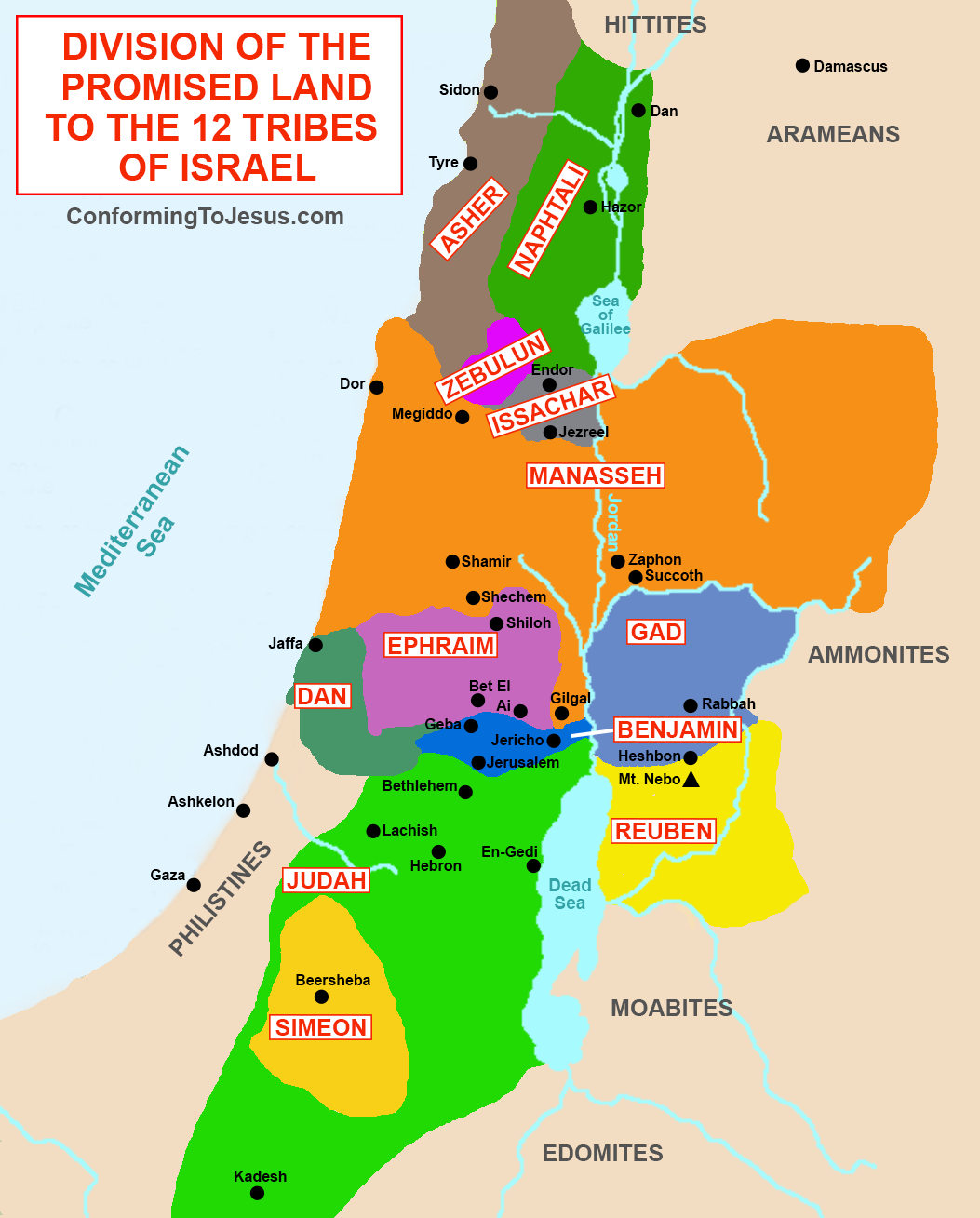
Around 931BC one of Solomon’s sons, Rehoboam, faced a major issue of growing division between the 12 tribes of Israel, specifically taxing the north for royal court purposes. You might remember the number 12–Jacob had 12 sons from where these tribes originate. Rehoboam eventually went to war with them and the kingdom divided into two, the northern kingdom (Israel) and the southern kingdom (Judah).

All in all, Israel had 19 kings and Judah had 20. This period of time from 931-586BC was marked by a lot of turmoil. Some kings were good. Some were downright evil. In a previous sermon a week or so ago, I mentioned that several kings opened up the worship of idols and false gods in the temple. This pagan practice was at times linked to literal child sacrifice.

Israel was conquered by Assyria in 722BC and the people sent into exile. Judah lasted a bit longer, but was conquered by the Babylonians in 586BC. The various prophets of the Old Testament span this period of history, where many were active during Israel or Judah’s decline. Other prophets worked during the period of exile after both kingdoms fell.


I understand this is a lot of information. The bible is absolutely full of a lot of details that can teach us quite a bit. Here is one major point I think this tumultuous history of kings and kingdoms can teach us for today…

Politics do not grant salvation. I do believe that God can work through all things, but it is clear to me given the ups and downs of several centuries of Israel that God aims for something more radical than a political office. In Deuteronomy 17:14-20, God actually describes the perfect leader–someone who avoids violence, impure religion, and greed. Instead of typical “kingly” duties, Israel’s king would study the book of the law (and not turn from it “to the right or to the left” as the author of Deuteronomy put it!).

In other words, God envisioned the perfect priest to lead the people! As Christians, this is why we believe Jesus Christ is so important. Jesus is our only leader. Our allegiance ought to be to him, instead of some political game.

Kings in the Old Testament teach us quite a bit. Some were evil. Others did righteousness. We can all learn a lesson from reading this part of our bibles. And most importantly, we can give thanks to Jesus, our true everlasting king!

The Challenges of Bible Punctuation

You might be familiar with the oddities of the English language in the picture above. Another example I’ve heard of is that there’s a huge difference between, “I like cooking my family and pets,” and “I like cooking, my family, and pets.” Good grammar can save lives!

One unique thing about our bibles is that with ancient manuscripts, we don’t find modern punctuation. Likewise, depending on where you place a comma, period, or question mark, a verse can sound vastly different! Bible translation is often an extremely difficult task. Not only do scholars have to find English equivalents of old words, but they must also organize it into modern-sounding clauses and sentences.

One of my seminary professors put it this way: Every translation is an interpretation.

Interpretation is the act of crafting meaning out of something. We interpret what a painting signifies for a culture. We interpret and process how a song makes us feel. And we definitely interpret the bible, too. Every bible translation out there makes decisions on what particular modern words to use. Every translation structures sentences a certain way, making it readable for us today. Translation always involved some degree of interpretation.

Genesis 22 is a practical example of this abstract idea. Where we place periods and add clarification words can potentially alter the meaning of the biblical text.

To to simplify the translation, these verses literally read:

by Myself I have sworn says Yahweh for on account of which you have done-thing this and not have withheld-your son-only that blessing I will bless you and multiplying I will multiply-your descendants as the stars…

Difficult to understand for us today, right?

As you might guess, modern translations “tidy up” the ancient text a bit and make it flow according to modern languages. Without it, passages would sound very archaic, strange, and confusing! So we add punctuation, switch words around, and even fill in the gaps where there might be an implied word.


In my sermon yesterday, I noted that God did not want Isaac to die. Perhaps God was testing Abraham’s sense of justice and doing what was right. One of the reasons why I think this is a legitimate interpretation is because of what the ancient Hebrew text actually says. To clean up the choppy word-for-word translation from above, regardless of bible translation, there are basically two distinct clauses regarding Abraham:

  1. “I have seen that you have not withheld your son.”
  2. “I will bless you and multiply you…”

In some bible translations, scholars have connected these two ideas–one leads to another. For instance, many translations read: “Because you have not withheld your son, I will bless you…” This reading implies Abraham was rewarded for his supposed “good work” of wanting to sacrifice his son.

But note that the word “because” is not found in the original Hebrew text. In reality, we could just as easily make these two independent sentences. In other words, we could read the passage as: “I have seen that you have not withheld your son. I will bless you and multiply you…” Maybe God is simply describing an observation–Abraham was about to kill his son. Perhaps God’s blessing in Genesis 22 is not contingent upon Abraham’s action with Isaac. Maybe God was just reiterating the original covenant to Abraham. This alternative reading falls in line with what we as Christians believe about God’s grace: God gives it to us regardless of our action… We never “earn” grace ourselves! Despite Abraham’s struggles, God remained faithful to that covenant.

I think it is clear that Abraham struggled with justice–in my sermon I noted Abraham’s tragic episode with Hagar and Ishmael. Abraham did a great job of obeying divine commandments, but he needed to take it a step further and pursue Godliness in his own life. Likewise, I think the interpretation I explored on Sunday can be a unique option to consider.

Bible passages often mean different things for different people. The important thing, however, is that we continue to read the stories of scripture and discuss them with one another. We might disagree on the meaning of something, but God continues to speak to us in the process.

Lot’s Wife

There are many lessons to be gleaned from Genesis 19. But in the midst if this R-rated passage, there’s another odd detail we did not have time to cover during Sunday morning worship: What on earth was the deal with Lot’s wife?

To refresh your memory of the passage, here is Genesis 19:17, 24-26:

As soon as they had brought them out, one of [the angels] said, “Flee for your lives! Don’t look back, and don’t stop anywhere in the plain! Flee to the mountains or you will be swept away!”

Then the Lord rained down burning sulfur on Sodom and Gomorrah—from the Lord out of the heavens. Thus he overthrew those cities and the entire plain, destroying all those living in the cities–and also the vegetation in the land. But Lot’s wife looked back, and she became a pillar of salt.

Genesis doesn’t explain this random happening any further.

In some Jewish commentaries, we find speculation similar to what you might find in a common study bible from today. Some believe Lot’s wife was named Edith and perhaps this pillar-of-salt end was punishment for disobeying the angel. Perhaps she “missed” life in Sodom and did not fully want to leave it behind. It is impossible to know since we don’t hear the story from her perspective. John Wesley had a commentary on the bible, and here are some of his thoughts in line with this possible interpretation:

But his wife looked back from behind him – Herein she disobeyed an express command. Probably she hankered after her house and goods in Sodom, and was loath to leave them… she too much regarded her stuff.

Wesley agreed with this Jewish interpretation of the text, that Lot’s wife hesitated about salvation. She “looked back”, perhaps longing to return to the city of Sodom. It is not enough to simply say to others that you will follow God. What matters is following through on that promise.

Another option was that she died simply because she saw God Godself. This interpretation would be fitting with priestly and temple traditions of biblical books like Exodus. For instance, Moses could only see God’s backside, and in another strange episode, appeared to be “radioactive” after speaking with God!

And yet another option might be the sin of voyeurism–that is, deriving pleasure by witnessing the pain of others. Perhaps she had heard the cries of the dying and wanted to see the destruction for herself. This is definitely an important lesson for us to grapple with today, consider how we find entertainment in fictional and actual violence. Oftentimes we tragically gain pleasure by seeing others suffer, and this is most certainly a sin.

As you can see, there is quite a bit of speculation about Lot’s wife and the lesson behind it. Jesus does make mention of her in Luke 17:32-33:

Remember Lot’s wife. Those who try to make their life secure will lose it, but those who lose their life will keep it.

Luke 17 gives us a reminder that it is futile to try to predict or control the future. Jesus tells us it is better to simply follow Christ and seek God’s kingdom instead of worrying about life right now! Jesus appears to hint that Lot’s wife’s problem was pursuing security instead of placing trust in God.

Regardless of how you interpret this detail of the Sodom and Gomorrah narrative, I think the point is clear to keep your eyes fixed on God and away from sin. Consider this well-known verse from Hebrews 12:1-2, which I believe captures this idea perfectly:

Therefore, since we are surrounded by such a great cloud of witnesses, let us throw off everything that hinders and the sin that so easily entangles. And let us run with perseverance the race marked out for us, fixing our eyes on Jesus, the pioneer and perfecter of faith. For the joy set before him he endured the cross, scorning its shame, and sat down at the right hand of the throne of God.