The Issue of Debt

For our sermon on tithing yesterday, I emphasized how committing to a monthly tithe can encourage you to think critically about your finances. Debt is another issue that often could be included in this conversation, too. Many times, because of circumstances of owing a lot of money, people feel utterly unable to be generous, whether that be a massive housing payment, student loans, or credit card bills.

In Proverbs 22:7, we find a profound thought on money: “The rich rule over the poor, and the borrower is slave to the lender.” This is quite a verse to unpack! If you’re familiar with the financial literacy corner of the internet, you know that many figures like Dave Ramsey take this verse very seriously. There’s a rather sizable movement of Christians today addressing the issue of debt and how to get out of it in order to build wealth and increase financial generosity.

When you think about it, this verse from Proverbs really can teach us a lot for today. We often struggle with a “you only live once” kind of mindset. We may also think that money will buy us happiness. Likewise, we quickly develop a dysfunctional relationship with money, trying to buy our way into contentment. And many times, we can even feel hopeless because of everything. Debt can become an idol distracting us from God.

Consider this example from the book The Boglehead’s Guide to Investing. This finance book essentially outlines three categories of spending and saving:

  1. Bill and Betty “Borrower” have a debt mentality. The Borrower family eagerly finances their lifestyle through debt. Cash buying is almost unheard of, as they can easily put everything on a credit card. They “rob” tomorrow to pay for today. A approach like this often leads to dire outcomes, once bills become due.
  2. Chad and Cathy “Consumer” have a paycheck mentality. The Consumer family looks at the monthly payment and decides whether or not they can afford something. This is clearly a step up from borrowing absolutely everything, but the Borrowers are literally one paycheck away from financial disaster.
  3. Ken and Kim “Keeper” have a savings mentality. The Keeper family prioritizes budgeting to save for the future. They might have a smaller income than the Borrower or Consumer families, but in the long run, they’ll end up with more resources, due to frugal lifestyle habits. They might even carry some debt, but have a plan to address it rather than let it spiral out of control. They tend to never spend more than they take in. They set aside at least 10% of pay and invest it for the future.

Out of the three examples above, who do you think has the most stress? Who do you think might have the most freedom to help out other people?

Sure, the Borrowers might enjoy the most material goods for a brief time. The Consumer family might also be alright, provided they continue working and never have any emergencies. But remember the wisdom from Proverbs 22—the borrower is slave to the lender. Letting debt control your life can lead to unbearable stress. So if you ask me, I think Ken and Kim Keeper would be the best suited to endure life’s ups and downs. They would almost certainly be in the best position to be financially generous to a charitable cause!

As far as faith goes, you may be able to guess where I’m going with this. Extraordinary debt can hinder our ability as disciples of Jesus. If we are so burdened with bills (or worried about providing a roof over our head), chances are we likely aren’t thinking much about helping other people. Hopefully we get to a place where we can wisely manage God’s blessings, as well as share those with other people.

Christianity has a rich history of social justice. Where the church goes, people get lifted up out of poverty. The hungry get fed. And in turn, those people share the good news with others who are impoverished and at the margins. Hopefully we can all work to control debt, and enter into greater financial freedom to be generous with our money to other people. That’s one important way we can spread Jesus’ love.


Here are some helpful resources surrounding budgeting, debt-reduction, and generosity. There’s quite a bit out there on the internet that will cost you money, but if you look diligently, a lot of information can be free:

Previously written blog posts on tithing:

Unanswered Prayers

We’ve all prayed for something and felt like God didn’t answer it. In the best case scenario, perhaps we gained some wisdom and in retrospect are thankful to God for not “answering” us, given current circumstances.

But prayer and answers from God are often tough issues to face. Consider the example of someone with a cancer diagnosis. She prays for direct healing, but the disease gradually worsens. Treatments don’t work. Things look bleak. Or consider the example of a parent yearning for a child to make the right decisions. He prays to God for guidance and protection for that child, but the young family member makes bad decisions time and time again.

Where is God in unanswered prayers? Is God ignoring us? Is God actually doing anything? Is God testing us?

The answer to these questions is often ambiguous. We don’t always know the mind or actions of God. And I think the answer is a lot more complicated than simple cliche sayings.

Prayer was at the forefront of our sermon yesterday. The blind man seeing trees in Mark 8 shows us the messiness of miracles and healing. Jesus did a “do-over” to fully make things right. Even after the healing, this man would have likely experienced eye trouble in old age, as well as dying a physical death, too.

There are several factors of prayer and divine intervention that may or may not impact your own personal experience with petitioning God. Consider the following…


God is not Santa Claus, and prayer is not a Christmas list

We often think of prayer as simply asking God for things. In reality, prayer is communication with God. Hopefully we learn to praise and thank God, repent of our shortcomings, and also listen to our heavenly parent. I find it helpful to remind myself that while prayer does include asking God for things, petition is only part of that deeper relationship. We should also never treat prayer like witchcraft or spell-casting–saying certain words to create a desired outcome.


Is it God’s will… or my will?

We frequently confuse our personal will and desire with that of God’s. The classic example of this is someone praying to win the lottery. Care to take a wild guess as to whether or not that person is submitting to God’s will? Most likely, s/he is simply wanting to pursue greedy desires to have a lot of money for minimal effort.

Sometimes our prayer life centers upon our will instead of God’s. We want our way. In this regard, remember Jesus’ teaching on prayer with the Lord’s Prayer–thy will be done.


What about human freedom?

God has gifted us with free will. We have the ability to say “no” to God. This is necessary for love to exist–for instance, you cannot coerce or threaten someone to genuinely love you! True love requires the freedom to walk away.

Many times with prayer, we are partly wrestling with the issue of human freedom. Praying for someone to make a good decision? That person bears some responsibility, thanks to human free choice. Sometimes prayer doesn’t turn out the way we want it to because of human-created circumstances. Sure, God could easily “strong arm” our world to submission, but I think God often takes a step back to allow for the potential of love.


Our world is broken

Our world is fallen. It is sinful. Things don’t work out like they should. This is a basic fact of our broken reality. We struggle with sin in personal actions. We also see the effects of sin in the lives of other people, as well as general circumstances in the world around us.

When praying to God, we often face the reality of our broken world. Bodies fall apart and stop working, and our time here on earth eventually comes to an end. As with human free choice, I believe God works within our current circumstance to produce different outcomes.


These are just a few issues to keep in mind as you think about prayer.

I have one final thought to sum up everything: Keep on praying. Just like the blind man in Mark 8, keep on seeking God’s healing. It doesn’t matter what may happen or if you feel “unanswered”… it is imperative to continue that communication with God.

Righteous Anger?

Image result for anger

Is it OK to get angry?

This question might sound somewhat silly. Anger is a fairly common emotion. It comes rather easy for us in most situations! From moody toddlers to self-sufficient adults, people of all ages get upset at either life circumstances or other people.

I think it is still worth wrestling with this question, however, given that our world is often filled with anger to the point of blind, unrelenting rage. Anger is also often connected to violence, whether physical or verbal. We quickly assume our anger is always righteous, but we don’t do a good job of defining either term!

Scripture makes many references to anger, humans, and God quite a number of times. Some of these instances are humans being angry with one another. I think these are likely the least “legitimate” forms of anger, considering that sibling rivalry and other conflict lead to terrible outcomes in scripture, not to mention God is the “missing character” of these tragic tales! Sometimes anger is expressed by humans at circumstance. The Psalms, for all their so-called “devotional” language, are often filled with expressions of anger. And finally, there are many well-known instances of God being angry with humans.

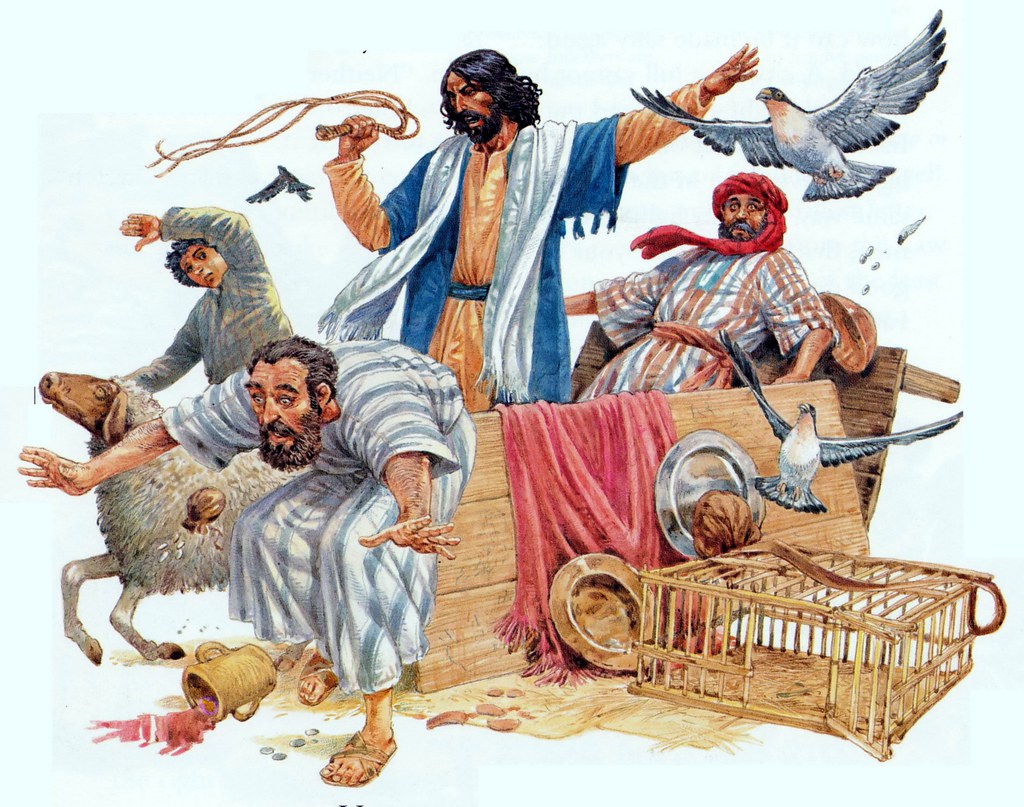
Our sermon on Sunday highlighted a point in Jesus’ ministry where he arguably felt anger–he cursed the fruitless fig tree. Right before this odd episode we read about another case of anger where Jesus also drove out all the corruption in the temple.

Image result for jesus angry temple

So what should be our “standard” for getting angry? Is it simply a harmless emotion? Or could it be something toxic? Is “righteous anger” even possible?

To narrow down this issue, let’s turn to Ephesians 4:26-27, which states that “In your anger do not sin: Do not let the sun go down while you are still angry, and do not give the devil a foothold.”

When I think about anger and faith, these verses always comes to mind. Paul commands the church of Ephesus that anger does not necessarily lead to sin. Moreover, even when we are angry, we should still not dwell on that emotion–we must literally put it to rest as we end our day! Unexamined anger can actually give Satan a foothold and cause us unthinkable damage.

Here are some general thoughts about what do do with this common emotion…

When you begin to feel anger, ask yourself, “Does it feel like I’m being led into sin?” I think anger would lose its destructive power if we simply examined our emotions.

Anger is often connected with judgment. We as Christians are called to judge things and not people. Judging between right and wrong is better called discernment, and is an important exercise to do throughout your daily walk. On the other hand, judging people is something only God is allowed to do.

I would argue that we can think of anger in a similar manner. It is OK to get angry at things, but to direct our anger at another human, we potentially cross the line. We rush to judgment, rather than seeing that person as a child of God. That person ought to be the object of our love, instead of bitterness.

What might be some things to get angry about? I think Jesus gives us a practical example.

Jesus was angry that God’s temple had been corrupted. Perhaps Christians could learn a thing or two and speak out against greed in our culture. We would much rather place our hope and trust in the almighty dollar, instead of an everlasting relationship with God. That’s definitely something to get “angry” about.

Jesus was also angry with the fig tree’s unfruitfulness. Maybe we ought to be mindful of our own fruitfulness. Anger is a valid thing to feel when considering the fact that our world is broken, but we struggle with being self-centered and being faithless. We also turn to look the other way when someone is in need. Hopefully we cultivate spiritual fruit as Christians.

Remember that it is OK to feel anger… and also remember that we should not let it cause us to sin. Righteous anger is a legitimate part of faith, but we too often let our own anger run wild, without examining our heart.