Equal Marriage

You might be aware of a common debate in our world concerning the nature of manhood and womanhood. Are men necessarily suited for some things, while women others? What even constitutes something like manhood or womanhood? How might we be vastly different? How might we be the same? Is one particular group necessarily more emotional, rational, hardworking, “better with money”, or nurturing?

The church also wrestles with this topic, too, working to articulate what it means to be male or female. Some Christians, following the example of the surrounding culture, presume that men are superior, while women are subservient. If you ask me, the church has tragically fallen prey to this worldly tendency, whether that be the case of some denominations forbidding women to pray and teach, to Christians arguing that men don’t necessarily need to worry about raising children.

The fancy theological terms for this debate are complementarianism and egalitarianism (try saying those five times fast!). Each side turns to various bible passages to support their idea of gender roles, manhood, and womanhood.

To be a complementarian means you believe that men and women complement one another, kind of like two puzzle pieces coming together. Some denominations adopt this kind of viewpoint, arguing that men are “designed” for leadership, while women must always take more passive roles. In some extreme cases, I’ve even heard of people arguing it is sinful for a woman to work outside of the home! Bible verses in support of this viewpoint include:

  • Ephesians 5:22- “Wives, submit to your husbands, as unto the Lord.”
  • 1 Corinthians 14:34- “The women should keep silent in the churches. For they are not permitted to speak, but should be in submission, as the Law also says.”
  • 1 Timothy 2:12- “I do not permit a woman to teach or to exercise authority over a man; rather, she is to remain quiet.”

To be an egalitarian means you believe in a more level playing field, so to speak, where men and women are equal in God’s eyes. Some denominations put forth this view of equality for men and women. The curse of Adam and Eve brought about conflict between the two sexes, and it should be noted that an egalitarian believes this would be broken and sinful. God works to overcome this disparity in teaching us how to see one another as partners. Bible verses in support of this viewpoint include:

  • Genesis 1:27- “So God created humankind in God’s own image, in the image of God he created them; male and female he created them.”
  • Genesis 2:18- “Then the LORD God said, “It is not good that the man should be alone; I will make him a helper fit for him.”
  • Galatians 3:28- “There is neither Jew nor Greek, there is neither slave nor free, there is no male and female, for you are all one in Christ Jesus.”

Simply put, this is a complicated issue, and Christians often use the bible to support one particular view (all while the opposing side critiques how they ignore other verses!).

How would a complementarian interpret all those other laws of scripture… are they equally applicable as they ones about women in ancient Corinthian churches?

How would an egalitarian understand all the so-called “problematic” passages of scripture… Do we simply ignore verses about submission when referring to one particular gender?


The bible does say quite a lot of different things. So if you ask me, it’s important to consider the broad view of what God hopes to accomplish through salvation. Individual commands Paul may have issued in the New Testament might not necessarily carry the same weight as Genesis 1 or Galatians 3, which paint a more egalitarian picture.

As you might be able to guess with how Concord operates, United Methodist doctrine is thoroughly egalitarian. I really stressed this point in yesterday’s sermon. God calls us to view one another as partners in ministry, and this is especially true when it comes to a husband and wife. We believe God calls and equips men and women for various ministries, from being pastors, to parents, and everywhere in between. We are all equal in the eyes of God. Likewise, women serve many roles of leadership in our church–in fact, we wouldn’t be able to function without the help of absolutely everyone! Methodist churches also have ordained female clergy, serving in many congregations all over the world.

As I preached yesterday, when it comes to marriage, I firmly believe we need to have an egalitarian attitude about this commitment. The covenant of marriage requires two becoming one, where both sides seek to love another as Christ loves. Godly households need involved mothers and fathers. Ideally, a wife and husband ought to work together through all things, setting a loving example for a household. God might grant you with unique gifts as an individual, such as a stable job, clever mind, or nurturing heart. But overall, marriage must always be a partnership.
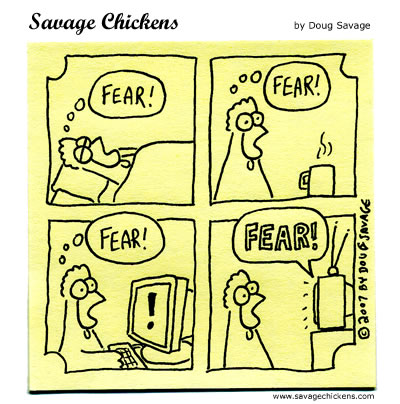
Fighting Against Fear

God clearly intends for us to not be afraid. In fact, variations on the phrase “do not be afraid” appear over a hundred times in our bible! Time and time again, God reminds us of the fact that we don’t have to be scared. This is truly a countercultural kind of commandment for our faith.

I was reminded of a book on our struggles with fear by Adam Hamilton, a Methodist pastor and prolific author. He once wrote a study on living an unafraid life and came up with a clever “FEAR” acronym to help summarize his overall point:

Face your fears with faith… Examine your assumptions in light of the facts… Attack your anxieties with action… and finally, Release your cares to God.

Let’s take a look at these phrases and how they can equip us to handle worldly fear…

  • Face your fears with faith

2 Timothy 1:7 reminds us this timeless truth: “For God has not given us a spirit of fear, but of power and of love and of a sound mind.” We often assume that doubt is the opposite of faith, but it could be argued that fear itself is the main culprit! Through the act of faith, we surrender control to God, trust in divine guidance, and let go of our worry. There’s no better way to initially confront your fears than with a heart of faith.

  • Examine your assumptions in light of the facts

Fear is often a very irrational sort of emotion. I mentioned yesterday how we tend to get worked up over “what-if” scenarios and fret over the future. Truth be told, our fears really don’t seem all too bad when considering real-life facts. For instance, we arguably live in the safest period of human history. War, epidemics, and violent crime have all declined over the past several centuries and/or decades. This reality is difficult for us to mentally consider when we are worked up over fearful emotions, but it is backed up by extensive data. In this regard, Jeremiah 17:9 really speaks to our modern struggles with this problem: “The heart is deceitful above all things and beyond cure. Who can understand it?” Our inner thoughts and emotions are often deceiving, especially when faced with fears.

Take a moment and consider the facts of the situation. Perhaps you are being too hard on yourself. Maybe you’re letting your emotions get the best of you. Even during moments of crisis, it is worth remembering that tomorrow will almost certainly come.

  • Attack your anxieties with action

Ask yourself this simple question, what am I going to do to deal with this particular fear? It is easy to feel sorry for yourself or hopeless instead of taking concrete action. It truly makes a difference to take tangible steps in order to address our fears. Instead of allowing that fear to rule you, action allows us to seize control of the situation. I’m reminded of one of the most well-known Proverbs (3:5-6):

Trust in the Lord with all your heart and lean not on your own understanding; in all your ways submit to him, and he will make your paths straight.

In other words, don’t sit idly by throughout life’s troubles. Actively attack those anxieties by leaning on God and taking action such as prayer, meditation, or talking with a brother or sister in Christ.

  • Release your cares to God

Psalm 55:22 tells us: “Cast your cares on the Lord and he will sustain you; he will never let the righteous be shaken.” When it comes to fear, we often take hold of every single thought, emotion, worry, and care. In releasing everything to God, we let go of all that may burden us. Being scared might weigh you down, but God always wants to bear those burdens for us.

A Hopeful Future

During the summer of 2017 I preached on Revelation. You might find this previous blog post insightful for this week’s sermon topic. Back then, I summarized the different viewpoints Christians have adopted over the years, as well as shared my own personal theology on Revelation.


“This world is going to hell in a hand basket.”

You may have heard this phrase before. It arguably originated in the 1600s, and later had a grim application to talk about guillotines and capital punishment in latter centuries.

People will point to instances of war, shootings, violence, and general unrest as evidence that our world is “going to hell in a hand basket.” It is a pessimistic, hopeless sort of view, yet many of us struggle with believing it. We presume that the “sinfulness level” of the world is ever-increasing and that there is simply no hope to be found.

Works of fiction in recent decades like the Left Behind series and The Late, Great Planet Earth have unfortunately fueled this dark, twisted ideology. Personally, I believe that stories like these have tragically shaped contemporary Christian theology more than the bible itself! As I noted yesterday, predictions about the future make a lot of money and capture attention well. Apocalyptic works paint a dismal picture, where God is so angry with the world that we are utterly helpless. One words to describe this view is escapism–the belief that we need to flee from the world and only focus on our destination in heaven.

The same doomsday-themes are common throughout our broader culture. Many bestselling movies focus on the supposed end of the world, with wars and natural disasters resulting in mass death and destruction. Even something as random as the popularity of zombie movies and shows is also connected to our general anxiety about worldly uncertainty. We tend to fantasize about a possible world with no morals or consequences for our actions towards other people and creation as a whole, all while our enemies suffer greatly–but that’s another blog post for another time!

Indeed, we always seem to think the world today is somehow different than previous times. You might be able to notice this subtle belief in the media we consume, from popular movies to nightly news reports. Usually when you hear someone say that our world is going to hell, they have a deep nostalgia of some idealized past, whether it be a personal childhood, a certain decade, or era of human history.

The problem with this pessimism is that it doesn’t exactly square away with the bible. Our world has always been sinful. People have always murdered one another. We have always used creative ways to harm our neighbors, with words, actions, or inactivity. So it’s worth toning down our anxiety about the future. In the gospels, the topic Jesus discussed most wasn’t the future or even the end of the world. Rather, it was about the nature of God’s kingdom. Jesus was busy sharing the heart of God with other people, rather than trying to scare or shame people at every corner.

The same is also arguably true even for the supposedly “scary” bible passages in books like Revelation. The broader point of these books is that we must still have hope. Instead of God throwing the world into hell and utterly destroying creation, in Revelation 21 we read about how God comes down to earth, as a bride prepared for her husband. In other words, God mends all the brokenness in the cosmos. The world doesn’t end up as a decrepit wasteland filled with suffering. In fact, God brings heaven to earth.

When we think about the future, Christians are called to reject all the pessimism we see in our world.

The world is not going to hell in a hand basket. Instead, as Revelation 21:5 reminds us, God gives us a message of hope:

And he who was seated on the throne said, “Behold, I am making all things new.” Also he said, “Write this down, for these words are trustworthy and true.”

When thinking about the future, you might be tempted to go along with wild predictions and fear mongering. Resist that temptation, and instead remember God’s hope.