“Behold the Man” Throughout the Ages

This week’s blog post is geared towards visual learners! We all learn in different ways, and perhaps for some readers, exploring art may provide additional insight into the biblical topic we discussed this week.

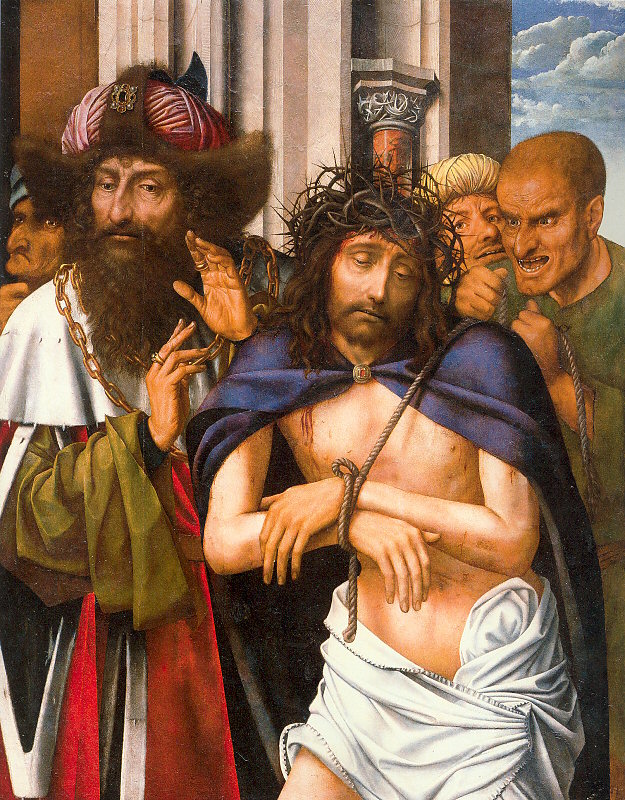
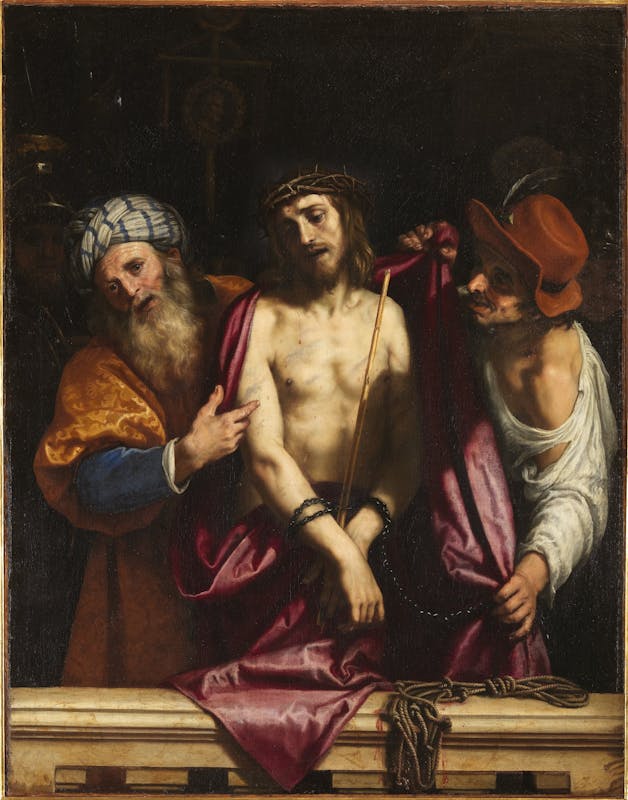
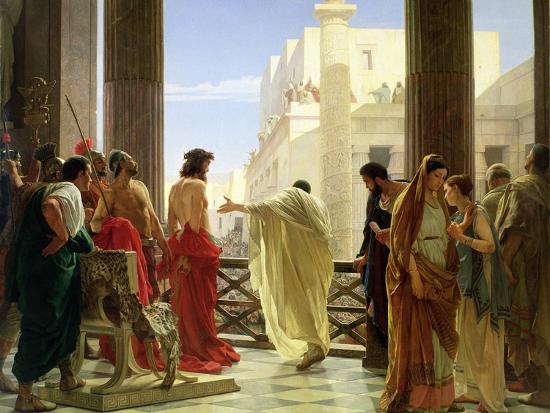
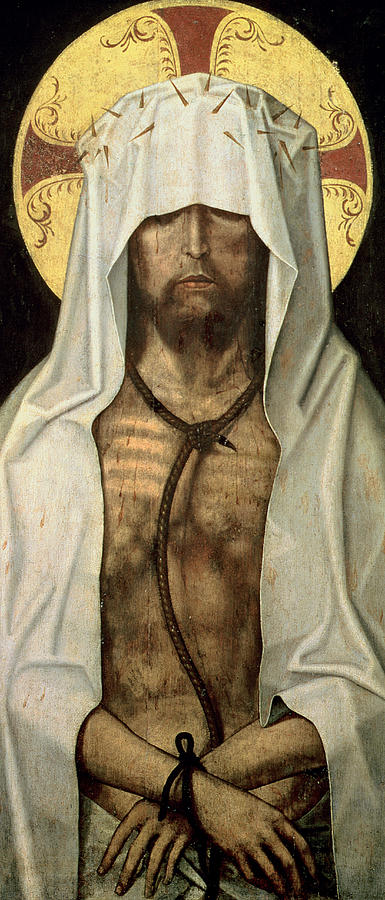
The phrase Pilate used to present Jesus–“behold the man”–is translated as ecce homo in Latin. Fans of art and art history may recognize the Latin phrase, as many artists have sought to depict this profound moment of biblical history. Here are various iterations of Ecce Homo throughout the past several centuries.


Hieronymus Bosch, 1475


Abraham Janssens, 1612


Tinotoretto, 1546


t

Quentin Massys, 1520


Lodovico Cardi, 1607


Image result for antonio ciseri

Antonio Ciseri, 1891


Honoré Daumier, 1850


Image result for ecce homo portuguese school

Unknown, 1400s


Image result for ecce homo modern

Sister Mary James Ann Walsh, 1953


Image result for ecce homo modern

Damian Gierlach, 2000s


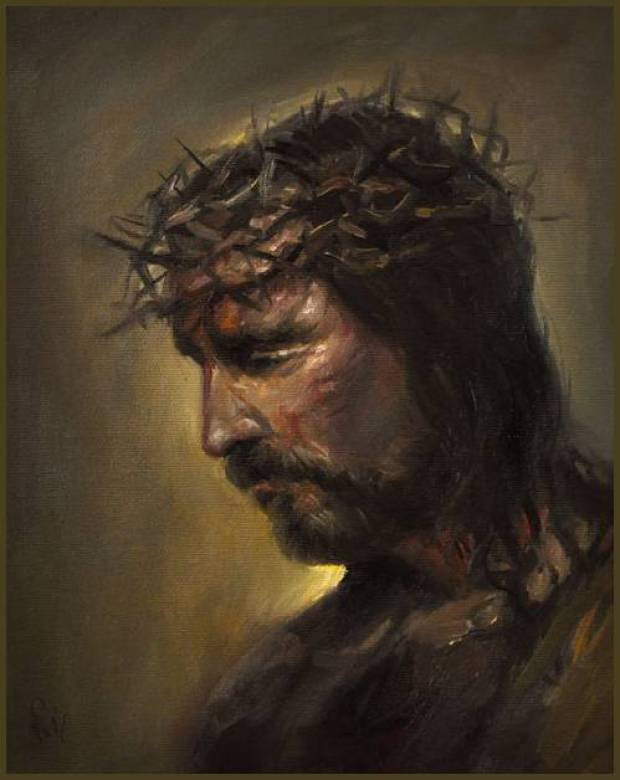
What sticks out to me is the stark contrast between Jesus and the surrounding crowd. Some paintings tend to be more idealized in representation, while others are more raw and realistic. Some are rooted in the Renaissance era, while others are more abstract. But in just about every Ecco Homo I find, you’ll notice how Jesus looks profoundly different… head bowed, sorrowful expression, surrounded by danger.

As I noted yesterday in the sermon, this is such a powerful scene as Jesus is presented to the crowd. It looks rather hopeless, but in this moment, God is revealing Godself through a grand plan of salvation. This is a pivotal moment in the crucifixion narrative, where Pilate assumes to be presenting some ordinary man, yet with that pronouncement, he is actually unknowingly presenting a savior who would change the world.

The Challenges of Bible Formation

There’s an interesting detail on our bible passage from yesterday’s sermon. In many bibles, translators often place a footnote after John 8:1-11. Here’s how the NIV folks put it:

The earliest manuscripts and many other ancient witnesses do not have John 7:53-8:11. A few manuscripts include these verses, wholly or in part, after John 7:36, John 21:25, Luke 21:38 or Luke 24:53.

So what’s up with the story of Jesus and the woman caught in adultery? Does it actually belong in the bible? Did this story really happen back then?

This footnote may sound alarming, but we must remember that it was often a challenging, lengthy process to form scripture itself. This painful fact is true in part because ancient texts often did not last a long time. Papyrus can deteriorate over time. Likewise, “original” copies of scripture are basically nonexistent. People back then, knowing the full effects of wear and tear, would often copy letters in order to preserve them. Most letter fragments are exact matches, but there are sometimes variations. The end result is that there are seemingly countless bits and pieces of ancient biblical fragments. By my rough estimate, there are about 25,000 partial fragments and complete manuscripts of the New Testament. That’s a lot to sort through!

(As a side note, this is why the discovery of the Dead Sea Scrolls was so revolutionary–archaeologists and researchers were able to identify a lot of really old texts in phenomenal condition!)

Throw that reality in with the fact that not every piece of papyrus was a complete set of a biblical book. In fact, there were many gospels and letters floating around for many years! One of the earliest tasks of the church councils beginning in 325AD was to sort through all the documents circulating in the ancient world–for gospels, they prayerfully discerned that Matthew, Mark, Luke, and John will be included.

To see what I mean about bits and pieces of fragments, consider what is known as the Rylands Library Papyrus P52 (also known as the St. John’s Fragment). This small, tattered piece is arguably the oldest known item of the New Testament:

Image result for st john's fragment

P52 is dated to around 125-175AD. Needless to say, the analysis of handwriting, grammar, and age of ancient Greek is way above my pay grade or educational level!

The earliest “complete” manuscript of a biblical book is John’s gospel from about the year 200. And the oldest complete set of all New Testament books (all under one binding) date to around 350 or so.

This brings us back to the issue of John 8. About 4% of extremely old Greek sources (fragments like the P52 one above), happen to include the story on Jesus and the adulteress. Other do not. Some even place the story in Luke’s gospel or other chapters of John.

Some Christians might be alarmed that either (1) this story is absent in 96% of the oldest writings, or (2) there is such a length “gap” of time between Jesus’s life to later in history when we have a copy of the story. Instead of worrying about the issue, here are a few thoughts on this dilemma…

Regardless of “authenticity” this passage does not contradict the message of Jesus. We read extensive examples of Jesus encouraging forgiveness and mercy, all while preaching against judgment. In my mind, the John 8 theme fits right in with who Jesus truly was. It does not nullify any broad theological idea presented in the New Testament.

Extra-biblical sources do reference the woman caught in adultery. “Outside” sources from the time period do allude to this story taking place. St. Leo, an early pope, used this story as an example in a sermon. The same also goes for St. Augustine’s writings, too. Eusebuis, an early church historian, also referenced the woman and Jesus. Many people in the 300-400s were convinced this story was authentic. Even though it might be missing from early fragments and manuscripts, the story itself was still widely accepted around that time period.

If you seek out skepticism, you’ll find plenty of reasons to doubt. With so many fragments and copies (and a complicated history to boot!), it can be easy to doubt the bible’s formation. However, we do need faith in our heart to trust God will use texts like this to shape our life. At least in my opinion, there’s something truly incredible about this book!

There’s more to faith than obsessing over individual verses. American Christians often get hung up on issues like scriptural authority and proving aspects of the bible. How can we know that 100% of our bible is God-inspired? The broader point of Christianity, however, is simply following Jesus Christ. The bible is indeed a special book, but we must never forget that Christ is our “end goal.” Scripture points us in his direction through that unique revelation. To sum it all up, the story of Jesus and this woman reveals the loving heart of God.

What’s Up With the Methodist Church?

Related image

For this week’s church blog, let’s take a look at some current events with the UMC. This might be a bit longer than my usual writing, but it is important nonetheless.

As you might be aware, there’s a big meeting going on right now with the United Methodist Church called a “Special Session” of General Conference. In our denomination, we meet together for business and doctrinal decisions with this governing body. It include delegates from every Annual Conference. Half of delegates are laity, while the other half are clergy. To put it simply, General Conference is the only entity that can make policy or speak for the denomination.

The issue at hand for this conference in 2019 is human sexuality, specifically the issue of LGBT inclusion. As you might recall, marriage equality became the law of the land a few years ago with Obergefell v. Hodges. Even before that supreme court ruling, there had been extensive debate over issues like gay marriage in the church. Other denominations have wrestled with these questions over the past several years, too, and the United Methodist Church may or may not “split” over it in the next few days.

Currently, the UMC disproves of the practice of homosexuality. There are basically a handful of options GC is addressing right now. I’ll try my best to describe each impartially and succinctly. Keep in mind that GC is occurring right now as I type this, so some information may change depending on amendments, recommendations, and voting! But here’s a general summary on the path forward:

  • One Church Plan– This plan leaves the decision for same-gender weddings to individual pastors and churches. One Church basically argues that the issue is not worth splitting over, and that well-intentioned Christians on both sides can come to legitimate, opposite conclusions.
  • Connectional Conference Plan- This plan essentially creates three branches of the UMC, loosely connected under the broad “umbrella” of Methodist tradition: Traditional, Progressive, and Unity. Supporters of this plan argue that a “Connectional Conference” maintains unity in the denomination, while allowing groups of churches to honor their own convictions.
  • Traditional Plan– This plan maintains the current stance of the UMC prohibiting homosexuality. There are some provisions and amendments that may provide more enforcement of church law (such as taking away ministry credentials for pastors who marry same-gender couples).
  • Simple Plan– This plan does away with the language prohibiting homosexuality in the church Book of Discipline. It is somewhat similar to One Church, but contains fewer guidelines for churches and conference.

Here are some of my personal thoughts on the whole process…

There’s a lot of distrust among the people at General Conference. The traditionalist side will allege sabotage against the progressive side and vise-versa. Even a centrist or moderate position like One Church will make people on the extremes upset since there is compromise in the plan. Tragically, the UMC has mimicked the trends of our culture of being polarized.

People have widely different interpretations of scripture. Those who hold a traditional view of marriage will argue that the bible gives a clear picture of prohibition–think of it as a “timeless” teaching on par with God is one, Love your neighbor, or Forgive others. Those who hold a progressive view of marriage will argue that the Holy Spirit moves in ways unique to human history–think of biblical prohibitions against same-sex marriage as we would Old Testament laws we don’t have to follow because of Christ’s covenant. The debate can quickly devolve into repeating the same set of bible verses back and forth ad nauseam.

Money always makes things more complicated. Current and retired clergy may be anxious about what will happen with their pensions and how they may be funded. Everyday church members may worry about who will “keep the building”–since church properties are kept in trust with the conference. Different sides of the debate may hesitate leaving the church because of potential costs of schism. For better or worse, money is often a driving issue.

Each plan has valid criticisms. People have offered up many critiques of various proposals. “The Traditional Plan is too punitive.” “The Simple Plan alienates the global church or otherwise socially conservative areas.” “The One Church Plan doesn’t truly solve the issue.” “The Connectional Conference Plan is just too complicated.” “X plan goes too far in one direction.” “Y plan doesn’t take a strong enough stance.”

We don’t exactly have a widely-accepted definition of the word unity. The UMC has often prided itself of being a moderate kind of denomination. We’ve had prominent Democrats and Republicans as members. The UMC doesn’t require everyone to sign a strict agreement on how to interpret the bible. We are (hopefully) united by the theology of John Wesley and the religious movement he started several hundred years ago. So several questions remain: What issues are worth dividing over? Is compromise OK in regards to LGBT issues? Might it be best if some churches go their separate ways?


As I’ve emphasized in worship before, we all need to pray for this process. We often rush to worry, rather than surrendering these cares unto God.

This morning I happened to check out our bishop’s daily devotionals he posts on social media and the conference website. I think it is especially applicable today:

It may seem like the worst day of your life. But you’ve had them before. Not only did you survive, you experienced God at work in ways that literally changed the course of your day. How can this be? It’s just what God does by coming to you when you’re hurting, showering you with love, helping you deal with whatever reality you’re facing and planting seeds of hope in your soul. So if today seems like the worst day of your life, remember that God’s about to make a change.

Even if you are worried about General Conference right now (and some people might even think it is the “worst day of your life” now or in the coming days!) never forget that God will continue to work in your life.